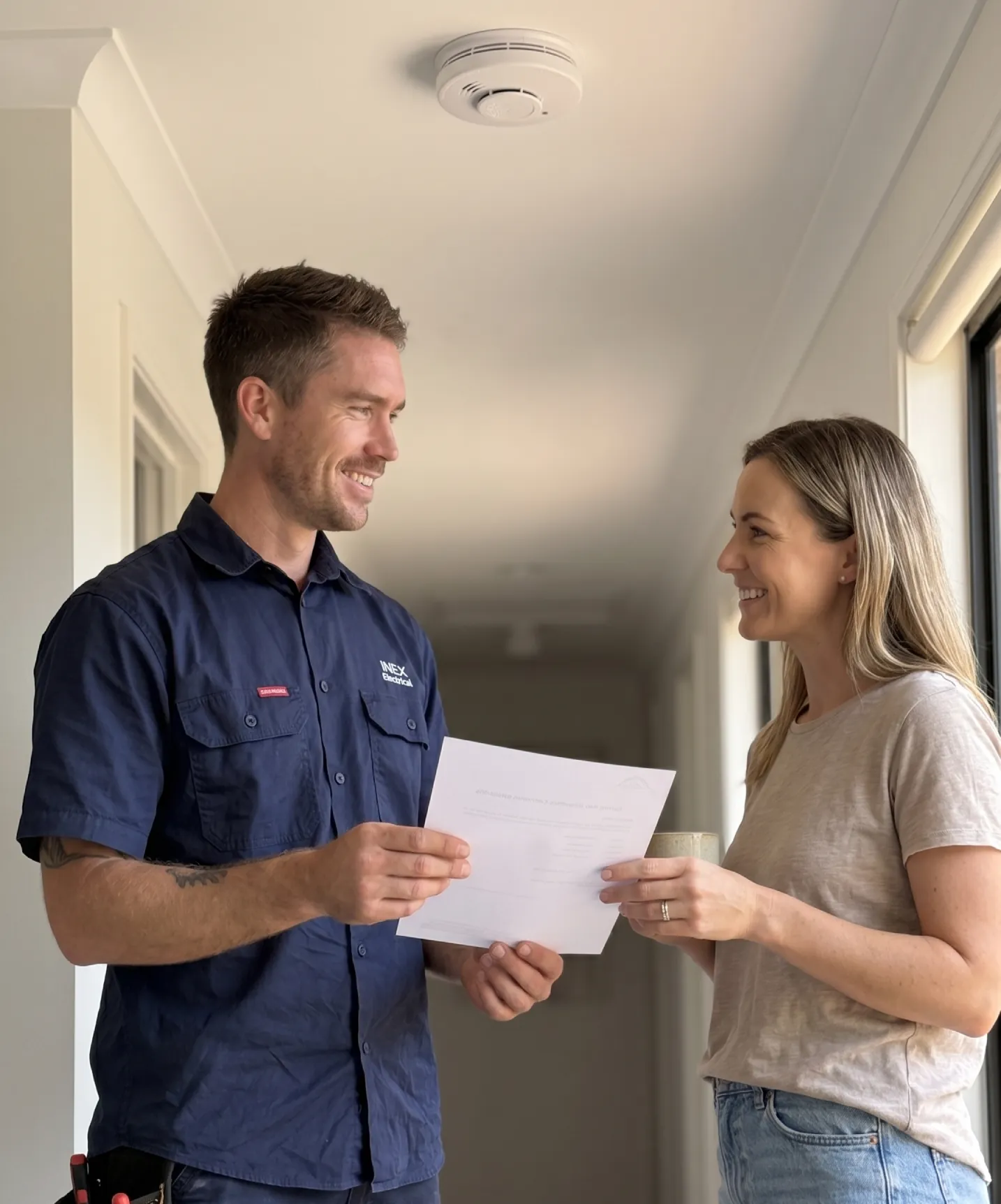
INEX Electrical: QLD Smoke Alarm Compliance Gold Coast
Interconnected photoelectric alarms installed to QLD legislation. Compliant before the 1 January 2027 deadline.
General information only. Always confirm current requirements with the QLD Fire and Emergency Services website or your building certifier.
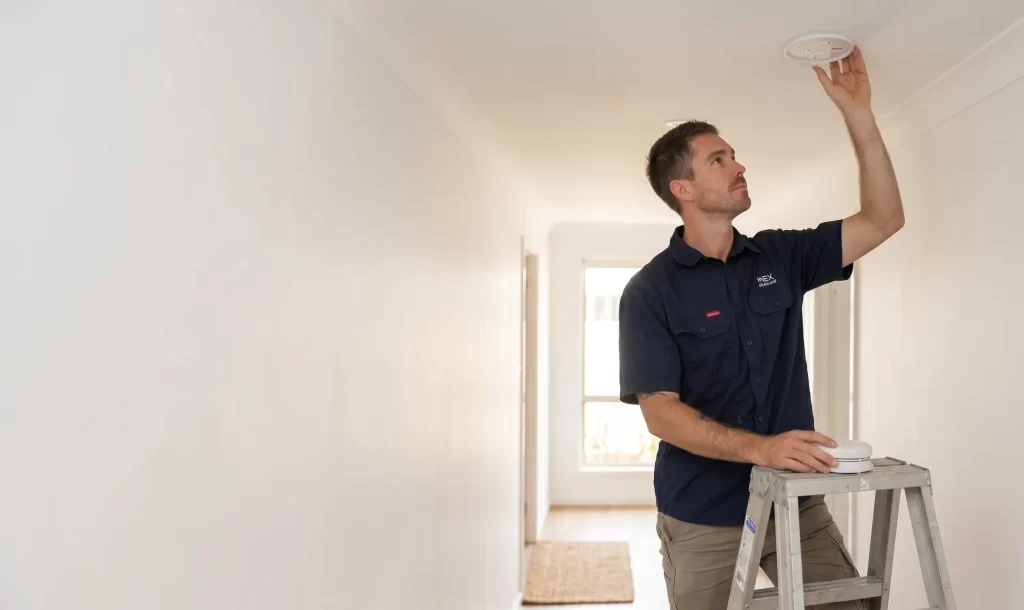



The QLD smoke alarm laws are changing.
The deadline isn't.
From 1 January 2027, every Queensland dwelling – owner-occupied homes, rental properties, and new builds – must have interconnected photoelectric smoke alarms in every bedroom, in every hallway connecting bedrooms, and on every storey. The existing 10-year lithium battery alarms many homes already have don’t meet the new standard on their own. They need to be interconnected, which usually means hardwiring or adding a wireless interconnect system.
The deadline applies regardless of whether you sell, renovate, or change tenants before 2027. The penalties for non-compliance – particularly for landlords and agents – are real and enforceable.
THE 2027 REQUIREMENTS
What's Required to be Compliant
Under the new legislation
- Photoelectric alarms only (not ionisation, which is the older technology)
- Interconnected — when one alarm sounds, every alarm in the property sounds
- In every bedroom where someone sleeps
- In every hallway that connects bedrooms
- On every storey — including basements and any level where people are present
- Hardwired to mains power, OR 10-year lithium non-removable battery
- Wireless interconnect acceptable where hardwiring isn’t practical
- Compliance certificate on completion (rental properties)
What this means for your property
- Most homes need 4–8 alarms depending on size and layout
- Wireless interconnect avoids chasing walls in finished homes
- Hardwired interconnect preferred in renovations and new builds
- Alarms must be less than 10 years old at all times
- Tenants must be told where alarms are and how to test them
- Property managers need a current compliance certificate on file
- Replacement required if any alarm fails testing
From assessment to compliance certificate
Three steps, no mucking around.
Free compliance assessment
Install day
Compliance certificate
WHY HOMES FAIL THE CHECK
Most homes fail on the type of alarm, not the number.
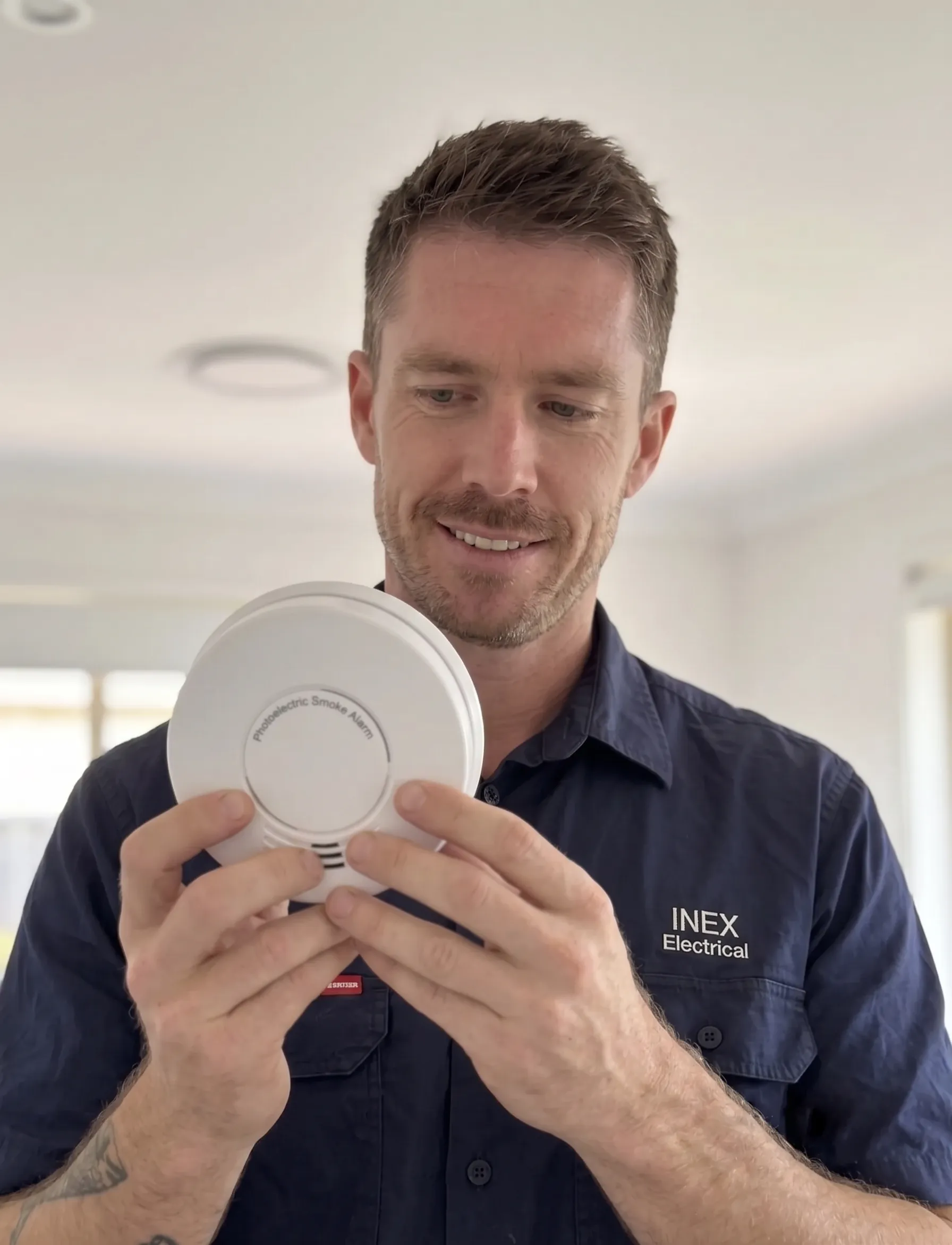
Most homes don’t fail because of missing alarms. They fail because the wrong type was installed.
Ionisation alarms (the older round-style units in many homes built before 2015) don’t meet the new QLD standard. Neither do single-station photoelectric alarms that aren’t interconnected. Common failures:
- Ionisation alarms still in place (need replacement with photoelectric)
- Photoelectric alarms installed but not interconnected
- Alarms more than 10 years old (visible manufacture date on the back)
- Missing alarms in bedrooms or hallways
- Alarms that have been painted over or covered (interferes with sensor)
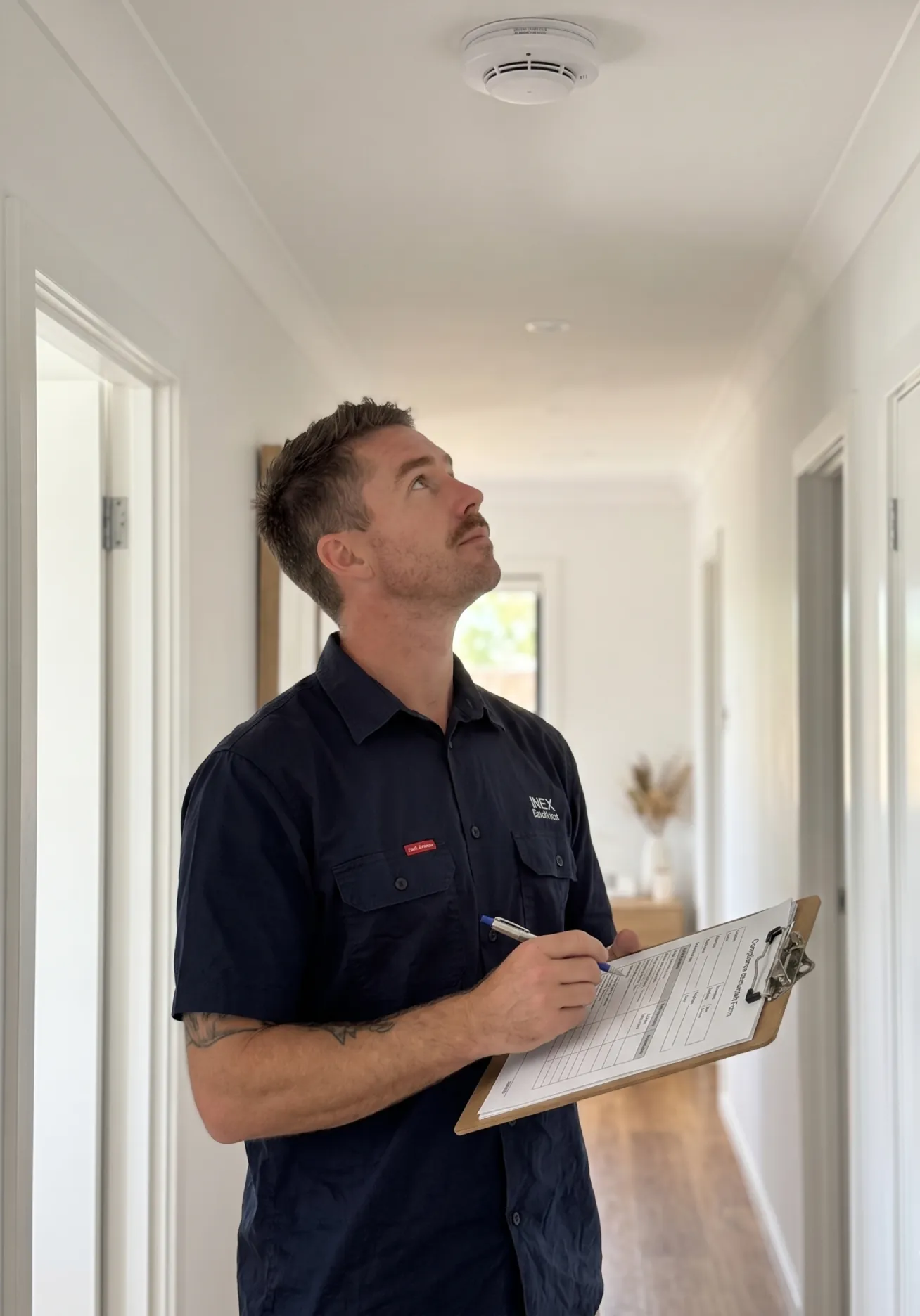
A free compliance assessment catches all of these in one visit.
Upfront pricing, no surprises
Every home is different. Here's what to expect.
-
Standard 3-bed single-storey home
4–5 interconnected photoelectric alarms, wireless interconnect
Compliance certificate on completionFrom $850 -
Larger single-storey or standard double-storey
6–8 interconnected photoelectric alarms Mix of wireless and hardwired depending on access
$1,200 – $1,800 -
Hardwired installations
New builds, full renovations, or homes with ceiling access
Quoted per project off plansFrom $1,500
Pricing as a guide only. Every job quoted on-site, fixed in writing. Property managers – contact for bulk and multi-property rates.
Not sure if you’re in the service area? Call James on 0439 222 130 — he’ll let you know straight up.
Installing smoke alarms across the Gold Coast
Based in Southport, on the road across the Gold Coast and northern NSW border. Same-day callouts available for most areas during business hours.
North
Southport · Labrador · Helensvale · Hope Island · Coomera · Upper Coomera · Oxenford · Pimpama
Central
Surfers Paradise · Bundall · Benowa · Ashmore · Nerang · Carrara · Robina · Varsity Lakes
South
Mermaid Beach · Broadbeach · Burleigh Heads · Burleigh Waters · Miami · Palm Beach · Elanora · Currumbin · Tugun · Coolangatta · Kirra · Tallebudgera
Common questions about QLD smoke alarm compliance
When does the new QLD smoke alarm legislation take effect?
1 January 2027. From that date, every Queensland dwelling must comply. The deadline applies regardless of whether you sell, renovate, or change tenants before then.
Do my existing 10-year lithium battery alarms comply?
On their own, no. The new standard requires interconnected alarms – when one sounds, they all sound. A wireless interconnect module can be added to most modern lithium battery alarms to bring them up to standard. If your alarms are more than 10 years old, they need to be replaced entirely.
Do I need photoelectric alarms or are ionisation alarms okay?
Photoelectric only. Ionisation alarms (the older round-style) don’t comply with the new standard. They also don’t respond as well to the slow-smouldering fires that cause most house fire deaths. Replace with photoelectric.
How many alarms do I need?
Depends on the layout. As a guide, a standard 3-bed single-storey home usually needs 4–5 alarms – one in each bedroom and one in the hallway. Double-storey and larger homes need more. The free on-site assessment counts exactly what your home needs.
How long does the install take?
Most homes take 2–4 hours for a full compliance upgrade with wireless interconnect. Hardwired installs in new builds and renovations are quoted off plans and run as part of the electrical fit-off.
Will there be damage to my walls or ceiling?
No – wireless interconnect installs are surface-mounted. No chasing walls, no cutting into plaster. Alarms screw into existing ceiling with the interconnect module hidden in the alarm base. Hardwired installs (in new builds and renovations) are run in the ceiling space, no visible damage.
Do I get a certificate?
Yes. On completion you (or your property manager) receive a QLD smoke alarm compliance certificate, valid for the property. Keep it on file. Property managers should keep a current certificate against every rental property.
As a landlord, what happens if I'm not compliant?
Penalties apply. Under the amended legislation, non-compliant landlords face fines, and the property may be considered unsuitable for tenancy. Insurance claims can also be affected if a fire occurs in a non-compliant property. It’s not worth the risk – a compliance upgrade is cheaper than the fine.
As a property manager, can I invoice you directly for the work?
Yes. I work directly with property managers and real estate agencies across the Gold Coast. Quote off your instruction, invoice on completion, compliance certificate filed against the property. Bulk and multi-property pricing available – contact me to set up an agency rate.
What about the QFES interconnection and replacement program?
QFES has historically run programs to assist vulnerable households with smoke alarm replacement. If you (or your tenant) are eligible, mention it when you call and I can advise what’s available at the time. Otherwise, the cost of a full compliance upgrade is generally less than what most people expect – see pricing above.
Is your home compliant?
Free compliance assessment, fixed-price quote, certificate on completion. Book before the deadline closes in.
1 January 2027 deadline · Free compliance assessment · Compliance certificate included · Property manager invoicing available